Peer Review Process
Review Process
The Journal of Service, Innovation and Sustainable Development (JSISD) is committed to maintaining a fair, rigorous, independent, and timely peer review process. All submitted manuscripts are evaluated on the basis of academic merit, originality, methodological rigor, relevance to the journal’s scope, and contribution to scholarship and practice.
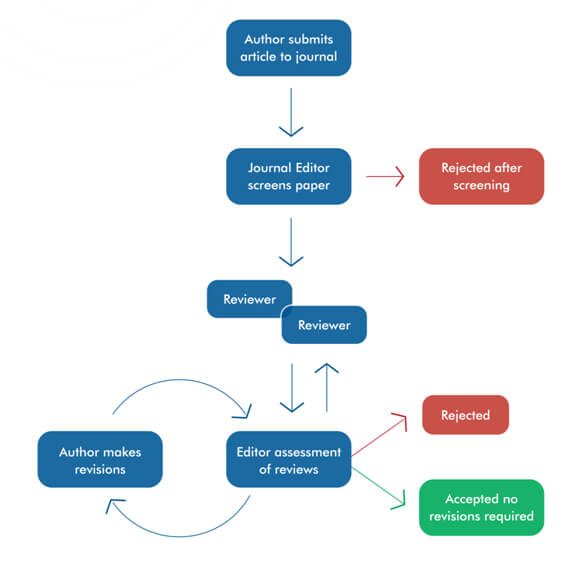
1. Initial Editorial Screening
Upon submission, each manuscript is first screened by the editorial office and the Editor-in-Chief or a designated editor. At this stage, the manuscript is assessed for:
- relevance to the aims and scope of the journal;
- originality and academic significance;
- compliance with submission requirements;
- clarity of writing and overall presentation quality;
- compliance with publication ethics and research integrity standards.
Manuscripts that do not meet the journal’s basic standards or fall outside the journal’s scope may be rejected without being sent for external review.
2. Peer Review
Manuscripts that pass the initial screening are sent for peer review. Reviewers are selected on the basis of subject expertise, academic competence, and absence of relevant conflicts of interest. Reviewers are expected to assess not only the originality and relevance of the manuscript, but also the internal consistency and transparency of the methodology, including the coherence between the abstract, methods, results, and conclusions, as well as the adequacy of sample description, measurement, and statistical reporting.
Reviewers are asked to assess the manuscript with regard to:
- originality and relevance of the research topic;
- adequacy of the theoretical framework;
- appropriateness and rigor of the methodology;
- quality of analysis and interpretation;
- contribution to existing literature;
- practical, managerial, or policy implications where relevant;
- clarity, coherence, and academic presentation.
Special Notes: Literature Integration and Citation Accuracy
Reviewers and editors are expected to assess whether the manuscript demonstrates appropriate engagement with the relevant literature. This includes evaluating:
- whether key claims are supported by appropriate references;
- whether the literature review adequately reflects the scholarly context of the topic;
- whether in-text citations and reference list entries are consistent and complete;
- whether statistical, policy, and factual statements are supported by reliable and verifiable sources.
Manuscripts with major citation inconsistencies or insufficient reference support may be returned for correction, revised prior to review, or rejected where appropriate.
3. Editorial Decision
After the review reports are received, the Editor-in-Chief or handling editor considers all reviewer comments before making an overall editorial decision. Possible decisions include:
- Accept
- Accept with minor revisions
- Revise and resubmit
- Reject
If the reviewer reports differ substantially or raise significantly conflicting evaluations, the Editor-in-Chief may invite an additional reviewer to provide an extra independent opinion before making a final decision.
4. Revision Process
If revision is requested, authors are expected to revise the manuscript carefully and respond clearly and respectfully to all reviewer and editorial comments. Revised manuscripts may be returned to the original reviewers or assessed directly by the editor, depending on the nature and extent of the revisions.
5. Conflicts of Interest in Peer Review
To protect the fairness and integrity of the review process, all editors and reviewers are expected to disclose any actual, potential, or perceived conflict of interest as soon as it becomes known.
A conflict of interest during peer review or editorial handling may include, but is not limited to:
- being affiliated with the same institution as one or more of the authors;
- having recent or ongoing research collaboration with one or more of the authors;
- having a supervisory, mentoring, or student–teacher relationship with one or more of the authors;
- having a personal, family, or close professional relationship with one or more of the authors;
- being in direct academic, professional, or commercial competition with one or more of the authors;
- having a financial interest that could be affected by the publication decision;
- any other circumstance that may compromise, or reasonably appear to compromise, independent and objective judgment.
Editors and reviewers who believe they have a relevant conflict of interest must decline to review or handle the manuscript.
6. Same-Affiliation and Related-Party Submissions
When a manuscript is submitted by author(s) from the same institution as an editor, editorial board member, or potential reviewer, the journal takes specific measures to ensure an independent and unbiased review process.
Such measures may include:
- assigning the manuscript to an editor with no relevant conflict of interest;
- excluding reviewers from the same institution as the author(s);
- obtaining additional independent reviewer reports where necessary;
- ensuring that the final editorial decision is made by an editor who has no relevant conflict of interest.
If the Editor-in-Chief has a conflict of interest with a submission, editorial responsibility for that manuscript will be delegated to another qualified editor without a relevant conflict.
7. Confidentiality
All manuscripts under review are treated as confidential documents. Editors and reviewers must not disclose, discuss, or use unpublished material from a submitted manuscript for their own research or personal advantage.
8. Review Quality and Integrity
The journal expects reviewers to provide objective, constructive, and professional comments. Review should focus on scholarly quality and not on the identity, institutional background, nationality, gender, or personal characteristics of the authors.
The editorial office reserves the right to replace reviewers, request additional reviews, or terminate a review assignment where concerns arise regarding bias, inappropriate conduct, or conflicts of interest.
9. Final Responsibility
The final decision on a manuscript rests with the Editor-in-Chief or the appropriately designated conflict-free handling editor. Editorial decisions are made on academic grounds and in accordance with the journal’s standards of fairness, quality, and publication ethics.
JSISD is committed to ensuring that the peer review process remains independent, transparent, and ethically sound, thereby protecting the credibility of the scholarly record.